Cultivating a Smarter Future in Agriculture
Farming isn’t just about tractors, crops, and weather forecasts anymore. It’s a data-driven, high-tech business that plays a vital role in global food security, environmental sustainability, and economic development. Today’s farmers are expected to grow more food with fewer resources, adapt to unpredictable climate patterns, and meet rising demands for transparency and traceability in food production. That’s where data-driven consulting steps in — offering the insights, tools, and strategies farms need to succeed in an increasingly complex agricultural landscape.
Data-driven consulting helps farms transform raw information — from soil conditions and rainfall to market trends and logistics — into actionable decisions. It empowers growers to boost yields, reduce waste, and improve profitability with precision and predictability. From large-scale commercial farms to small family-owned operations, agricultural producers of every size can benefit from this approach. 📈
In this article, we’ll explore the many ways data-driven consulting is revolutionizing farming and why it has become a necessity — not just a nice-to-have — for modern agriculture.
1. Precision Agriculture: Turning Insights into Actions 🧠🌱
Data-driven consulting helps farms implement precision agriculture — the practice of using data and technology to manage crops more efficiently. Instead of applying water, fertilizers, and pesticides evenly across entire fields, farmers can use precise data to apply exactly what’s needed, where it’s needed, and when.
Key data sources include:
-
Soil sensors that monitor moisture, pH, and nutrient levels
-
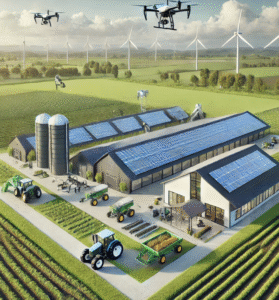
Drones and satellite imagery that assess crop health and identify pest issues
-
GPS-guided equipment that ensures accurate planting and harvesting
With a data consultant’s help, farmers can analyze this information and optimize every aspect of their operation. The results? Higher yields, lower costs, and a lighter environmental footprint.
According to the U.S. Department of Agriculture, farms that adopt precision ag technologies often experience measurable increases in productivity and profitability — a win-win for the farmer and the planet. 🌎
2. Weather and Climate Adaptation: Forecasting Resilience 🌤️🚜
Weather is one of the most unpredictable variables in farming, and climate change has only made it harder to plan. Data-driven consulting equips farmers with detailed climate models and historical weather data to build smarter risk mitigation strategies.
By integrating meteorological data with farm-specific data (e.g., crop type, planting dates, soil conditions), consultants can help farmers:
-
Adjust planting and harvesting schedules to minimize weather-related losses
-
Implement crop rotation plans that account for shifting rainfall patterns
-
Use long-term forecasts to plan irrigation schedules or adjust crop selections
Organizations like NOAA’s National Centers for Environmental Information provide high-quality datasets that consultants use to interpret patterns and create climate-resilient farming plans.
Farmers who rely on intuition alone may miss these subtle yet critical insights. Data-driven consulting helps bring clarity to the chaos of climate variability.
3. Supply Chain Optimization: From Field to Fork with Fewer Delays 🍅🚚
Farms operate within complex supply chains that include everything from seed suppliers and equipment vendors to distributors and grocery stores. When one link in the chain fails, the whole operation can suffer.
Data-driven consultants use logistics analytics to evaluate and streamline supply chain performance. This might include:
-
Predictive modeling to identify potential bottlenecks
-
Tracking tools to monitor transportation timelines
-
Cost analyses to improve purchasing strategies
For example, a consultant might analyze shipping delays and suggest switching suppliers or altering delivery schedules based on historic data. This level of foresight helps farms minimize downtime, reduce spoilage, and maintain consistent cash flow.
The International Food Policy Research Institute notes that improving supply chains with data can significantly reduce food waste and improve food availability — critical goals in global agriculture.
4. Financial Forecasting and Cost Control: Profit with Precision 💵📉
Operating a farm is capital-intensive, with many moving financial parts. Inputs like seed, fertilizer, and fuel fluctuate in price. Labor costs vary by season. Equipment needs repairs and upgrades. Without a clear understanding of the financial picture, it’s easy for expenses to spiral out of control.
Data-driven consulting provides financial modeling and forecasting services that allow farms to:
-
Predict costs and revenues with greater accuracy
-
Identify areas of overspending or inefficiency
-
Simulate different market scenarios and pricing strategies
With dashboards and visualizations, consultants help farmers see where their money is going — and how to make it work smarter. For example, using data to negotiate bulk seed purchases or track fuel consumption across equipment can lead to savings that add up fast.
According to McKinsey & Company, farms that use data for cost control and forecasting typically achieve better ROI and financial sustainability.
5. Regulatory Compliance and Traceability: Staying Ahead of the Curve 📋🍽️
Regulations around food safety, environmental impact, and labor practices continue to grow. Consumers and retailers are also demanding greater transparency — they want to know how and where their food was grown.
Data-driven consulting helps farms track, document, and report key metrics for compliance and traceability, including:
-
Pesticide and chemical use
-
Soil and water management practices
-
Harvest and storage procedures
-
Labor logs and equipment maintenance
With the rise of blockchain in agriculture, some consultants also help implement technologies that ensure end-to-end transparency. Being able to trace a tomato back to the exact row it was grown in isn’t just futuristic — it’s increasingly expected by buyers and regulators alike.
6. Human Resource Optimization: Maximizing Labor Efficiency 👩🌾🧑🌾
Labor shortages are a growing concern in the agricultural industry. Farms need to make the most of their available workforce without overworking or under-utilizing employees.
Data-driven consultants analyze operational and staffing data to improve workforce efficiency. This may include:
-
Task scheduling optimization
-
Job performance tracking
-
Predictive hiring models based on seasonal trends
For instance, if a consultant identifies that labor is being overused during non-peak hours or underutilized during harvest, adjustments can be made for a better balance. Additionally, data insights can support fair wage distribution and reduce unnecessary overtime costs.
The American Farm Bureau Federation has highlighted the importance of addressing agricultural labor issues through smart solutions — and data plays a big part in that strategy.
7. Sustainability and Environmental Stewardship: Growing Green 🌎♻️
Sustainable farming practices are no longer optional; they’re essential for long-term viability. Data-driven consulting plays a pivotal role in helping farms reduce their environmental impact while still increasing productivity.
Consultants work with farms to measure and improve:
-
Soil health and nutrient cycles
-
Carbon emissions and sequestration
-
Water usage and conservation
-
Biodiversity and land use patterns
By integrating data from environmental sensors, aerial imagery, and field observations, consultants guide farms toward eco-friendly practices that also make economic sense.
The Food and Agriculture Organization (FAO) reports that sustainable farming methods, powered by data, are key to feeding the planet while protecting its resources. Farms that adopt data-informed sustainability practices are also more likely to qualify for grants, certifications, and carbon credits — unlocking new streams of revenue.
8. Market Intelligence and Growth Strategies: Selling Smarter 🛒📈
It’s not enough to grow a good product — farms also need to sell it at the right price, in the right place, to the right people. Data-driven consultants provide market intelligence that allows farms to fine-tune their go-to-market strategies.
This includes:
-
Analyzing regional and global demand patterns
-
Monitoring commodity prices in real-time
-
Tracking consumer trends (e.g., organic, local, non-GMO)
-
Identifying new revenue opportunities, such as agritourism or direct-to-consumer sales
With data-driven insights, a farm can position itself more effectively, whether that means entering new markets, adjusting its product mix, or refining its branding.
According to AgFunder, agricultural ventures that apply data-driven growth strategies are more attractive to investors and better positioned for long-term expansion.
9. Technology Integration and Training: Bridging the Digital Divide 🧑💻🌐
While ag-tech tools are more accessible than ever, knowing how to use them and integrate them into day-to-day operations is another story. Data-driven consultants help farms navigate the complex tech landscape, offering support in:
-
Selecting the right software and hardware
-
Integrating new tools with existing workflows
-
Training staff on digital platforms and dashboards
From farm management software (FMS) to Internet of Things (IoT) sensors, the potential of agricultural technology is vast — but without proper consulting and onboarding, adoption rates lag.
Consultants act as a bridge between innovation and implementation, ensuring that farms get a strong ROI from their tech investments. Resources like the AgTech Guide from USDA can also complement this training.
Conclusion: The Future of Farming Is Written in Data 📘🌾
Farming has always been about timing, knowledge, and care — but in today’s rapidly changing world, data has become the most valuable tool in the farmer’s toolkit. From precision agriculture and financial forecasting to market intelligence and climate adaptation, data driven consulting helps farms make smarter decisions that lead to greater efficiency, higher yields, and stronger profitability.
More importantly, it empowers farmers to future-proof their operations, ensuring that they can meet the needs of tomorrow’s consumers while caring for the land that sustains us all.
Whether you’re managing thousands of acres or a small family plot, the message is clear: embrace data, or risk falling behind. Partnering with a knowledgeable data consultant could be the most transformative decision a farm makes — not just for its bottom line, but for its legacy. 🌱💼
Need help identifying how data-driven consulting can transform your farm? Don’t wait for the next drought or market downturn to take action. The answers are already in your soil, your spreadsheets, and your seasons — you just need the right guide to uncover them.