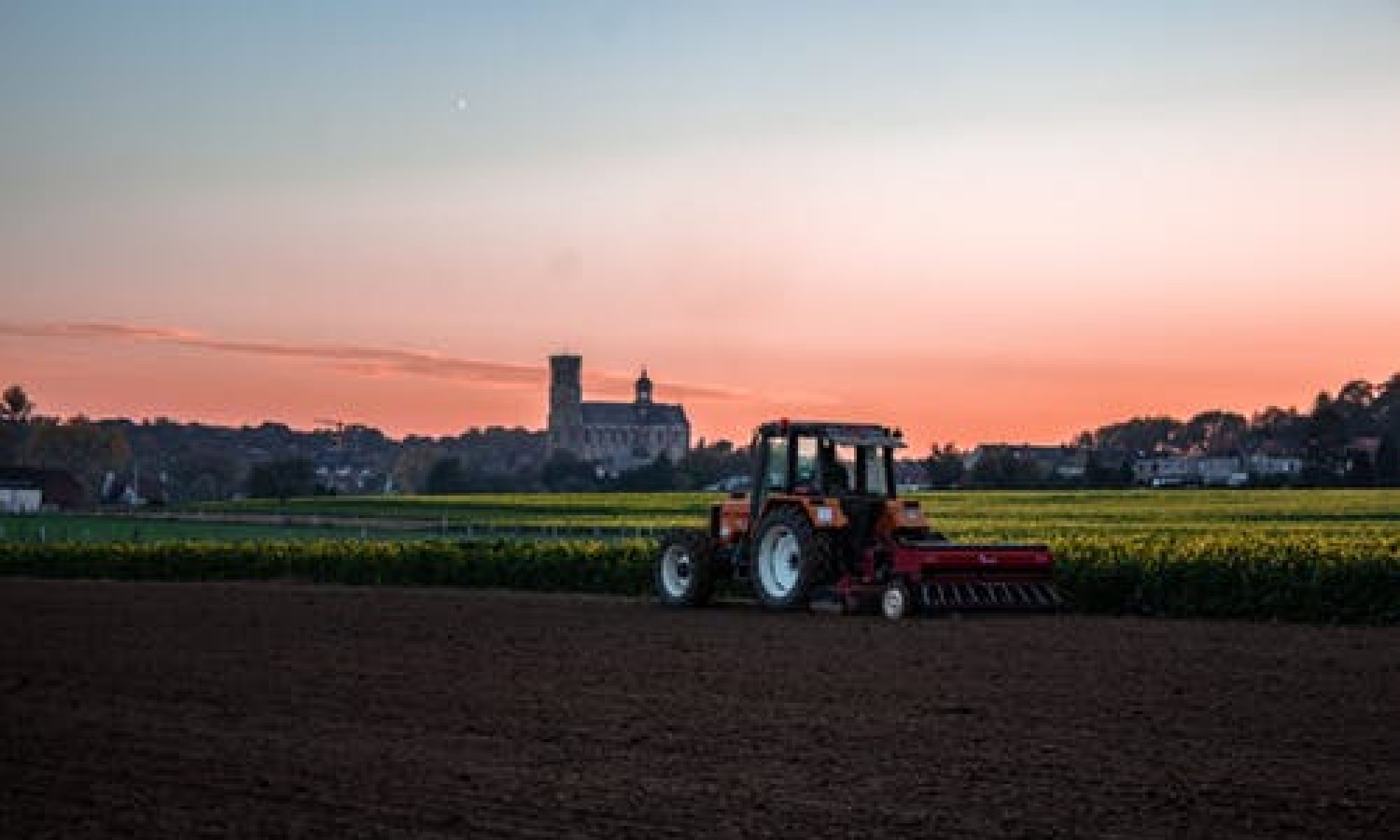
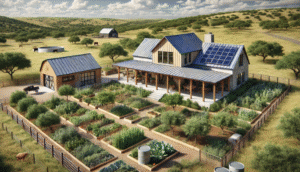
Healthy architecture is no longer just for hospitals, schools, or chic corporate campuses. Across North Texas, farmers around Dallas are rethinking how barns, greenhouses, packing sheds, and even on-site farm stores are designed and operated—so animals, crops, and people all perform better with less stress, less waste, and more resilience. In a region that straddles blistering summers, erratic storms, and rapid urban growth, “buildings that make living systems healthier” isn’t a luxury—it’s a competitive advantage. 🤠
What “Healthy Architecture” Means on a Farm
On the farm, healthy architecture blends practical building science with the realities of agriculture. It’s about ventilation that moves air at the animal level, daylight that reduces energy load and stress, water systems that conserve and recycle, surfaces that clean easily, and site layouts that keep workers safe while minimizing disease spread and material handling. It borrows from biophilic design (bringing nature’s patterns—light, views, vegetation—into spaces) and from high-performance building approaches (tight envelopes where you want them, natural ventilation where you need it, and mechanical assists when weather swings get extreme). This is as true for a dairy freestall barn as it is for a wash-pack shed, a mushroom room, or a controlled-environment leafy greens house. Successful Farming+2AgriLife Today+2
Why Dallas Farms Are Leaning In Right Now
Dallas is a national hotspot for urban and peri-urban agriculture. City support and private philanthropy have helped community and market farms scale up infrastructure—think cold storage, hoop houses, and irrigation upgrades—so food is fresher and more reliable year-round. That local momentum, combined with North Texas weather, is pushing farms to invest in healthier buildings that can handle heat, humidity, and sudden cold snaps without tanking animal comfort or crop quality. Dallas City News+2CultureMap Dallas+2
The Business Case: Healthier Buildings, Healthier Margins
When farmers upgrade ventilation, shade, insulation, and workflow, they see outcomes that show up in the ledger:
• Better animal comfort → steadier production. Good airflow at the cow’s level reduces heat load and keeps humidity from spiking—key for milk and weight gains. Successful Farming
• Fewer losses in extreme weather. From dairy to small ruminants and poultry, proper ventilation and heat abatement lower sickness risk during heat waves and reduce respiratory issues in shoulder seasons. Farm Progress+1
• Higher worker safety and retention. Bright, naturally daylit, well-ventilated spaces reduce fatigue and accident risk—especially in wash-pack and sorting areas where slips and repetitive motion injuries can occur.
• More reliable post-harvest quality. Cold rooms placed correctly relative to wash lines shorten the “field-to-chill” window, protecting texture and shelf life—critical when farms supply neighborhood grocers, restaurants, or CSA boxes citywide.
• Marketing power. Urban and direct-to-consumer farms can tell a better story: cleaner, safer spaces; humane animal environments; and lower resource intensity per pound of food—all resonate with Dallas buyers. SMU
What Healthy Architecture Looks Like on North Texas Farms
-
Ventilation that thinks like weather
North Texas heat demands barns and processing spaces with designed air paths: ridge vents or continuous sidewall openings for natural stack effect, ceiling or panel fans aimed at animal height, and actuated louvers to manage shoulder-season humidity. The rule of thumb many producers track is enough wintertime air exchange to keep moisture and gases low—then ramping to aggressive summertime flow to blunt heat stress. Successful Farming+1 -
Daylighting for people and plants
Translucent roof panels, clerestories, and north-facing glazing brighten interiors without ultraviolet overload or heat gain. In wash-pack buildings, daylight improves visibility, which reduces errors and improves food safety practices; in propagation houses, it keeps seedlings compact and healthy. -
Cleanable, resilient materials
Smooth, washable surfaces in animal areas and pack sheds cut down on pathogen harborage and cleaning time. Curbs, drains, and sloped floors keep water moving the right way, helping Dallas farms conserve water and keep spaces drier (which also controls pests and mold). -
Heat abatement and shade layers
Shade structures, reflective roofing, and vegetated windbreaks make microclimates more forgiving. In livestock systems, even small drops in radiant load can make animals eat more and stress less. Fan placement and sprinkler strategies are tuned to Dallas’ humidity so you don’t accidentally raise moisture without enough airflow to remove it. AGDAILY+1 -
Smarter site planning
Healthy architecture starts outside the walls: orient buildings to prevailing winds, separate manure lanes from fresh-produce movement, and keep traffic routes for tractors and delivery vans from crossing with pedestrian paths. These choices reduce dust, contamination risk, and bottlenecks, and they make compliance checks simpler. Texas A&M AgriLife Extension Service -
Community-scale resilience
For urban farms embedded in Dallas neighborhoods, infrastructure like shaded outdoor markets, edible landscaping, and flexible sheds for community classes or aggregation hubs amplifies social impact while increasing sales channels. Projects in South Dallas show how upgraded infrastructure and on-farm education spaces improve food access and neighborhood health. 🌱 SMU+1
Heat Is the New Benchmark—And Buildings Are the Lever
Recent farm reporting has hammered the point: extreme heat clips productivity and piles on risk. Whether you run cattle, goats, or layers—or specialize in greens and herbs—air movement, shading, and temperature control now define your season outcomes as much as genetics and feed. Investing in building-level heat mitigation (fans, high-volume low-speed systems, tuned natural ventilation, misters with adequate air exchange) keeps performance up when the thermometer spikes. For dairies in particular, keeping airflow at animal height is central to comfort and output. 🐄 Successful Farming+1
Water-Wise, Worker-Wise, Climate-Wise
Healthy farm buildings in Dallas also tackle water and labor:
• Water: Drip and micro-spray inside structures reduce evaporative losses; roofwater capture feeds wash-down or irrigates hedgerows. Segregated “clean/dirty” water lines in pack sheds protect produce and simplify sanitizing. Local producers switching to higher-efficiency irrigation have reported meaningful savings that compound over seasons. Natural Resources Conservation Service
• Labor: Cooler, brighter, less humid spaces are safer and easier to staff. In a tight labor market, that matters. A wash-pack that’s designed around worker heights, reach ranges, and flow reduces repetitive strain and speeds training—translating directly to throughput and morale.
• Energy: Dallas sun invites solar-ready roofs and east-west shading strategies. Insulated panels in cold rooms and vestibules at doors keep the cold in and the heat out, shrinking compressor run time and maintenance.
Design Moves Dallas Farms Are Making This Year
If you’re scoping upgrades before next summer, these are high-ROI steps farms around Dallas are prioritizing:
-
Fan mapping and controls
Don’t just “add a fan.” Map the barn and house air speed at animal height. Use controls that respond to temperature and humidity, and maintain belts and blades to keep efficiency up. Even small maintenance neglect can drop fan performance by nearly a quarter. Farm Progress -
Sidewall inlets and ridge vent continuity
Many legacy barns “leak” in the wrong places. Tighten what should be tight, then give air a clear in-and-out path—continuous ridge vents, generous eave openings, and baffles that keep air moving across occupants, not over their heads. Farm Progress -
Daylight without heat gain
Swap scattered clear panels for planned clerestories or diffusing panels on the right orientation. In wash-pack, add task lighting that complements daylight to minimize glare and shadows over inspection tables. -
Hygienic surfaces and drainage
Re-sloping floors, installing trench drains with removable grates, and lining walls with washable panels reduces sanitation time and protects product quality, especially in high-throughput summer harvests. -
Integrated shade and mist
Shade cloths, extended roof overhangs, and mister lines can work—if the airflow is right. Aim to lower radiant heat first, then use misting where the air can pull moisture away rather than trapping it. AGDAILY -
Cold chain adjacency
Place walk-ins directly off the wash area with air curtains or vestibules. The shorter the “field-to-chill” path, the more consistent your quality—and your customer satisfaction.
Farm News Sources You Can Learn From
If you’d like to go deeper on practical improvements—from airflow to building upgrades—these farm news outlets regularly share field-tested insights relevant to heat, ventilation, and infrastructure:
• Farm Progress — clear, nuts-and-bolts guidance on keeping ventilation systems effective through the seasons. Farm Progress
• Successful Farming (Agriculture.com) — accessible explainers on why airflow at the cow’s level ties directly to comfort and production. Successful Farming
• AGDAILY — timely coverage linking extreme heat events to livestock performance and the building strategies that counter it. AGDAILY
(Each link is used once, as requested.)
Dallas Context: Building Health Is Community Health
Urban growers and nonprofit farms in South and East Dallas are proving how better infrastructure supports health equity—more reliable produce, more dignified workspaces, and public-facing areas that host classes, markets, and training. As the city continues to fund urban ag infrastructure and as local universities and community partners lend technical support, the region’s farms are setting a template for “healthy buildings” that lift both yields and neighborhoods. 🌇🌾 Dallas City News+1
Conclusion: Make Buildings Your Next “Crop”
For Dallas-area farms, healthy architecture Dallas is a force multiplier. When you design for airflow, light, hygiene, ergonomics, and climate resilience, animals thrive, crops hold quality longer, and teams work safer and faster. The benefits stack: steadier production in heat waves, fewer losses in cold snaps, cleaner audits, and happier customers who can taste the difference. In a city that’s investing in urban agriculture and a region where weather is a daily wildcard, your next competitive edge may not be a new variety or a bigger chiller—it might be the smart, healthy building that ties your whole operation together. 💡🌱
Ready to sketch the next phase of your farm? Start with the places where people and products slow down—then fix the airflow, the light, and the line. Dallas is showing that when farm buildings get healthy, everything downstream does too.